
A new study by Michalis Charilaou explores how imperfections in iron change its magnetism as temperature rises. Using computer simulations of models containing up to eight million atoms, performed with the computing facilities of the Louisiana Optical Network Initiative (LONI), the research compares individual missing atoms with larger nanoscale voids in pure and alloyed iron. The simulations show that small, isolated vacancies can significantly lower the temperature at which iron loses its magnetic order. Larger voids behave differently: pure iron remains remarkably magnetic even with substantial porosity, while alloyed iron can lose magnetization across a broad temperature range as defects become more widespread.
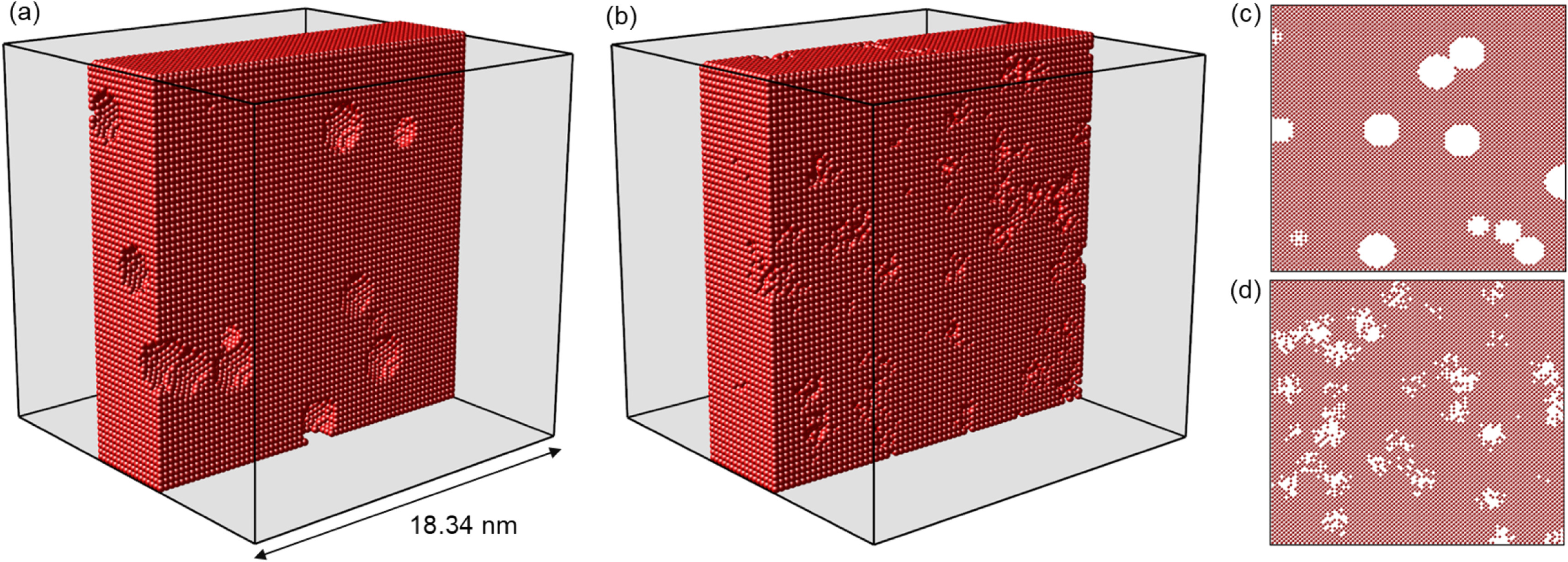
These findings clarify why the type, size and distribution of defects matter—not just how much empty space a material contains. They also point to a potential way to assess a metal’s internal condition: measuring how its magnetization changes with temperature could help reveal nanoscale defects without damaging the material. This may be useful for materials that must retain reliable performance in demanding settings, including high-temperature and radiation environments.
The paper, “Finite-temperature magnetization of imperfect bcc Fe lattices,” was published in the Journal of Magnetism and Magnetic Materials in 2026.