New publication by graduate student and faculty member gives possible explanation for unusual magnetic effects in layered CrCl3 alloys
A new study published in the Journal of Applied Physics by our graduate student Colin Nezat and physics faculty member Dr. Michalis Charilaou provides a possible explanation for unusual magnetic behavior observed in the layered material chromium trichloride (CrCl3).
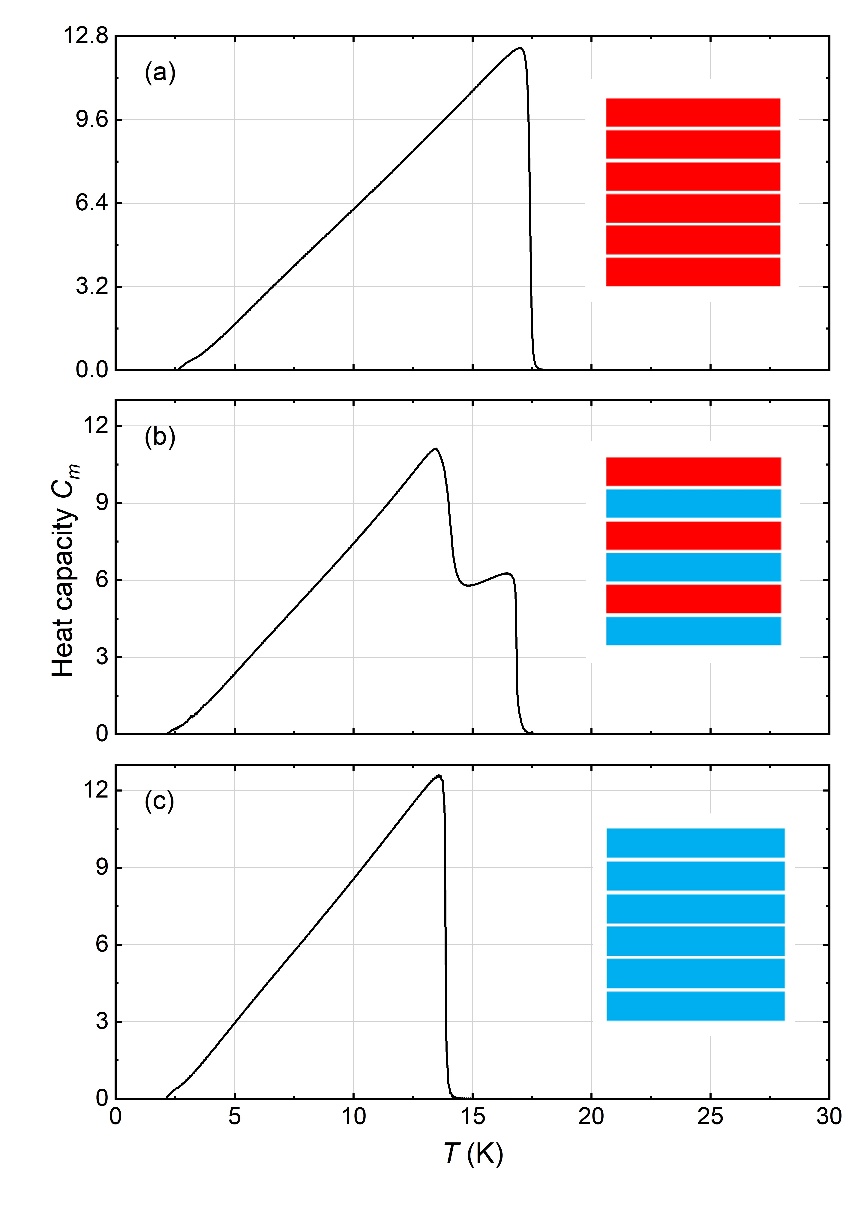
Experiments on CrCl3 have repeatedly shown unexpected changes in its magnetic properties as the material is cooled, but the origin of these anomalies has remained under debate. Using theoretical modeling, the researchers found that small differences in how the atomic layers are stacked can strongly affect the material's magnetic behavior, as seen in the figure here which shows the magnetic heat capacity of three different structures as a function of temperature. Their calculations show that structural imperfections, known as stacking defects, can produce the same unusual signatures that have been observed in laboratory measurements.